


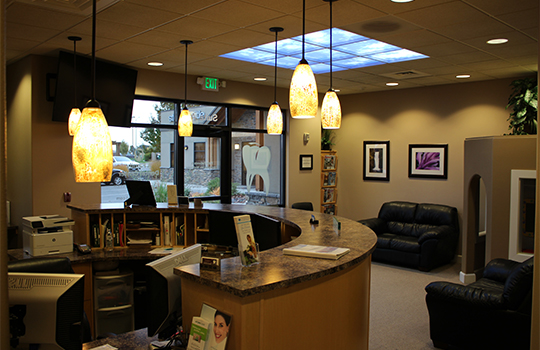
About Our Office
General and Cosmetic Dentistry
Whether you need to see a dentist for an emergency appointment, annual exam, teeth cleaning services, or tooth restoration procedures, you can count on Dr. Andrew Mohlman to provide you with a wide range of preventative and cosmetic dentistry options in Kennewick, WA.
Our skilled team can help you get the most out of any procedure with innovative treatments that address underlying issues first. Our Kennewick dentist will make sure you get the best possible treatment for lasting results.
A Family Dental Center is your one-stop shop for all your dental treatment needs. Our dental implants team evaluates your need for implants before installing them in your mouth. Dental implants provide a lasting solution for teeth replacement.
We also care for emergencies such as broken and fractured teeth, lost or damaged fillings, tooth abscesses, and other dental problems. Additionally, we offer tooth extraction to remove a wisdom tooth that threatens your dental health or badly decayed teeth.
We serve patients in Pasco, West Pasco, Richland, South Richland, Badger, Highland, and the surrounding areas. Contact us today!

Dental Care
Don’t let financial concerns prevent you from getting the dental care you need. We offer treatment plans that work with your budget as well as flexible payment and financing options.

Family Oriented Practice
We are a family practice, providing the highest level of care to all of our patients. We treat our patients like family, and we go the extra mile to ensure you are comfortable during your treatment.

Personalized Approach
We take extra good care of our patients by providing a personalized approach. Our team of dedicated dental professionals is always here to answer any questions you have about your treatment.

Our Services

Sedation Dentistry
Patients experiencing a high level of dental anxiety may benefit from our sedation dentistry services that can help you feel calm and relaxed throughout your treatment.

Dentures
If you have several missing teeth or you are missing all of your teeth, we can create a custom set of dentures to restore your smile. Talk to us about full, partial, and fixed partial dentures.

Extractions
Patients with excessively damaged or decayed teeth may need to have those teeth removed to prevent further oral health problems. We can perform surgical and simple extractions in our office.

Wisdom Teeth Removal
If you need one or all of your wisdom teeth removed, talk to Dr. Mohlman about surgical or simple extractions that can improve your oral health.